Ages 8–12, 90-minute sessions
Weekly small-sided match play
Quarterly video progress review
Indicative fee of £65 per month, no long contract
- check_circleBall mastery with both feet under light pressure
- check_circle1v1 attacking moves and defending positions
- check_circlePassing accurately and with the right weight
- check_circleReceiving on the half-turn and playing forward
- check_circleScanning the pitch before the ball arrives
- check_circleSpeed of decision and execution in small spaces
- check_circleCompeting, coping with mistakes and bouncing back
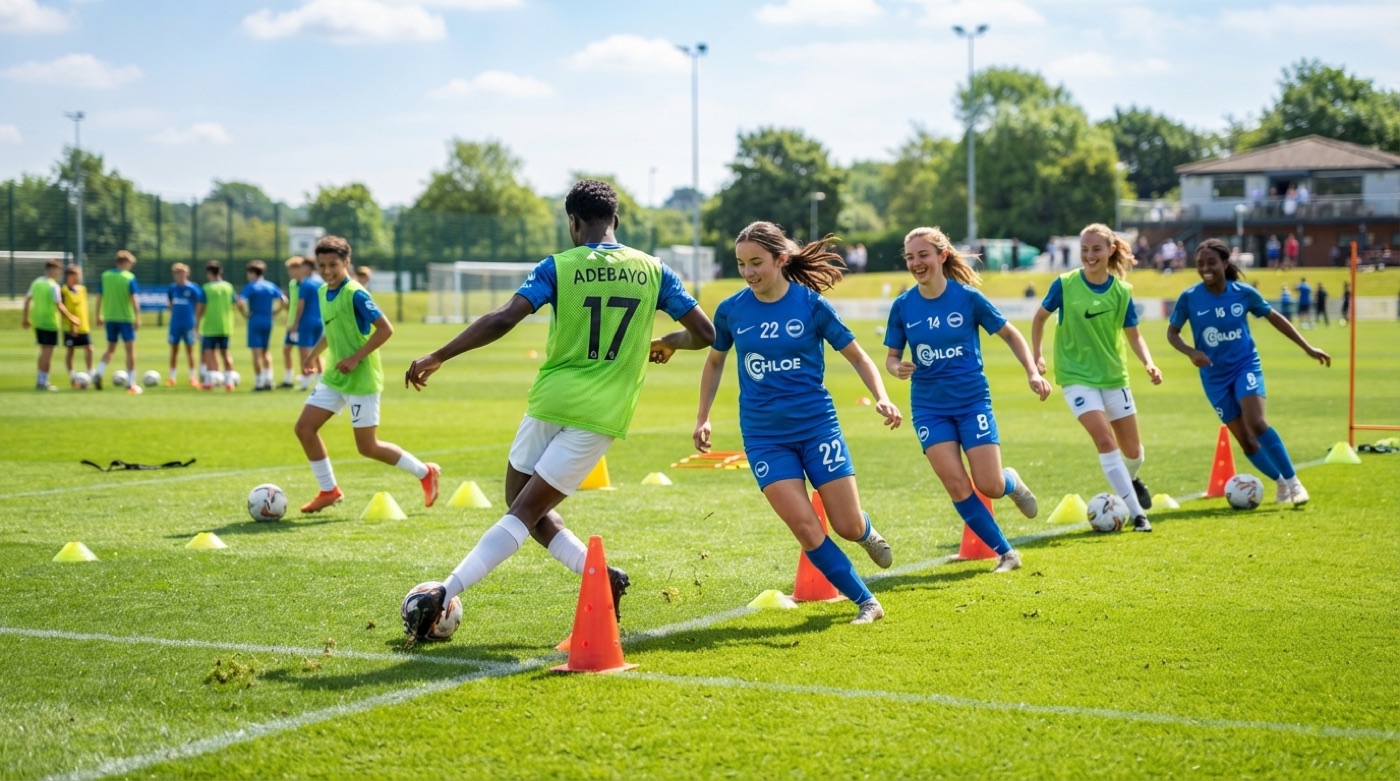
Junior Technical Development is the heart of the academy for players aged 8 to 12. These are the years when technique can improve fastest, so sessions are built around high repetition, clear coaching and plenty of football. Each session runs for 90 minutes, and every week includes small-sided match play so that skills are tested in real situations.
Who it is for
The programme suits boys and girls aged 8 to 12 who want to get better and enjoy being challenged. Some players join straight from Little Strikers, others come from school teams or local clubs. We group players sensibly by age and ability, and coaches set different challenges within the same activity so that everyone is stretched without being overwhelmed.
What a session looks like
A typical session follows a pattern players quickly come to know. This is an illustrative timeline for 90 minutes.
- 0–15 minutes: dynamic warm-up with the ball, combining movement preparation and touches.
- 15–40 minutes: technical block, such as ball mastery sequences, passing circuits or receiving patterns, with many repetitions.
- 40–60 minutes: a 1v1 or 2v2 practice that turns technique into attacking and defending decisions.
- 60–85 minutes: small-sided match play with coaching on the move.
- 85–90 minutes: cool-down, a drink and a short reflection on what went well.
The exact plan changes each week, and coaches adapt it to the group.
What players learn
Technical quality is the main focus. Players work on controlling the ball in tight spaces, using both feet, and passing with accuracy and the right pace. They learn how to receive on the half-turn so that they can play forward quickly, and how to scan their surroundings before the ball arrives.
We also teach attacking and defending instincts through 1v1 practices: when to take a player on, when to protect the ball, how to approach an opponent and how to stay balanced. Alongside this, players are introduced to simple team ideas such as support angles and keeping a shape, always in language that eight to twelve-year-olds can understand.
How we measure progress
Progress is shared with parents in a quarterly video review. Coaches select short clips from training and match play, show your child what they are doing well and agree one or two targets for the next quarter. Players also take part in festival tournaments, which give them the experience of playing against other squads in a friendly, well-organised setting. Results are not the measure of success; improvement and attitude are.
Is it right for your child?
This programme is right for a player who enjoys practising, is curious about getting better and is ready to play competitive games. It is not about early specialisation or pressure, and outcomes are never guaranteed. It is about building secure technique and good habits while football remains fun.
Every new player can start with a free trial session, with no kit needed. The indicative fee is £65 per month with no long contract, and weekly slots are confirmed at booking. Players who thrive may later move on to Elite Showcase and Tactics at age 13.
Parents often wonder how we balance learning with competing. Our answer is that both belong together. Practice without games can feel flat, and games without coaching rarely teach much. By mixing high-repetition technical work with weekly small-sided matches, we let players try new skills straight away, make mistakes safely and see why the practice matters. Coaches talk about effort, courage and good decisions, so that players learn that taking a risk and failing is part of getting better.